
For most gigs, club nights and festivals, the presale or early-bird window beats waiting. Prices are lowest, choice is widest, and you skip the anxiety of a sold-out page. Last-minute buying can pay off for big arena tours and festivals with deep resale markets, but for club nights and smaller shows, it's a gamble that often ends in "sold out." Sign up to official lists now and set price alerts before you do anything else.
TL;DR:
- Buying tickets during presale or early-bird releases offers the lowest prices and widest choices for most events, especially if purchased well in advance.
- Major tours and big festivals sell out quickly, with high-demand tickets often gone within minutes of going on sale, making early preparation critical.
- Last-minute purchases can sometimes be cheaper for large shows if resale prices dip 48 to 72 hours before the event, but this pattern is unpredictable for smaller venues.
- Secured verification through official sellers and using trusted resale platforms are essential to avoid scams and inflated fees when purchasing tickets secondhand.
- Following artist, venue, and promoter channels ahead of on-sale dates gives access to presales and codes, significantly improving chances of acquiring tickets at face value.
Table of Contents
- Best time to buy tickets by event type: festivals, tours and club nights
- How do you get access to presales before everyone else?
- Is buying tickets last minute ever cheaper?
- How do you budget for a whole season of shows?
- Why do organisers push for earlier ticket sales?
- Does the day or time you buy actually change the price?
- Do holidays and peak seasons change ticket prices?
- What happens to prices when an artist blows up overnight?
- Should you buy direct from the organiser or through a resale platform?
- An insider's honest take on ticket timing
- Find presales and manage your next event through TixRocket
- Sources
- FAQ
Best time to buy tickets by event type: festivals, tours and club nights
Timing isn't one rule. It shifts depending on what you're buying tickets to, and treating a boutique club night the same way you'd treat a stadium tour is where most people get burnt.
Festivals reward patience and speed in equal measure. Early-bird passes are priced lowest specifically to reward buyers who commit months out, before line-ups are even locked. If cash flow is tight, single-day tickets are worth considering over a full weekend pass. You get to cherry-pick the headliners you actually want without the wallet-emptying commitment.
Arena tours and major concerts move fast, and the data backs that up. Fans typically secure these tickets well in advance, with average purchase lead times sitting around 118 days for high-demand seasons. Presale and general on-sale windows for these shows can sell out within minutes, so preparation matters more than luck.
Club nights and one-off gigs are the exception where later purchases sometimes still work, particularly for recurring nightlife events with rolling capacity. Even so, presale entry usually locks in better pricing tiers and guarantees you're not turned away at the door once capacity caps out.
Before any on-sale, run through this:
- Save your payment details in your account beforehand, not during checkout
- Log in early rather than creating an account mid-rush
- Have any presale codes ready in a note app, not buried in an email
- Set a calendar reminder for the exact on-sale time, including time zone
How do you get access to presales before everyone else?
Getting into a presale is rarely about luck. It's about being on the right lists before the on-sale is even announced.
- Join artist, venue and promoter mailing lists. Most presale codes are distributed this way first, often 24 to 48 hours before the public knows a show exists.
- Sign up to verified fan clubs and venue memberships. Many nightlife venues and promoters run loyalty tiers that unlock guaranteed entry windows.
- Watch for bank and cardholder presales. Card issuers frequently partner with promoters for exclusive early windows tied to a specific card network.
- Follow artist and venue social channels closely. Secret drops and flash presales are increasingly announced there first, sometimes with no advance warning.
- Use alert and watcher tools, and set a hard reminder. Manually checking a page every hour is inefficient. A tool that pings you the moment tickets list beats refreshing a browser tab.
Pro Tip: Stick to one device with your payment method already saved rather than opening five tabs across different devices. Most ticketing platforms flag multiple simultaneous sessions as bot behaviour and can lock you out entirely.
Is buying tickets last minute ever cheaper?
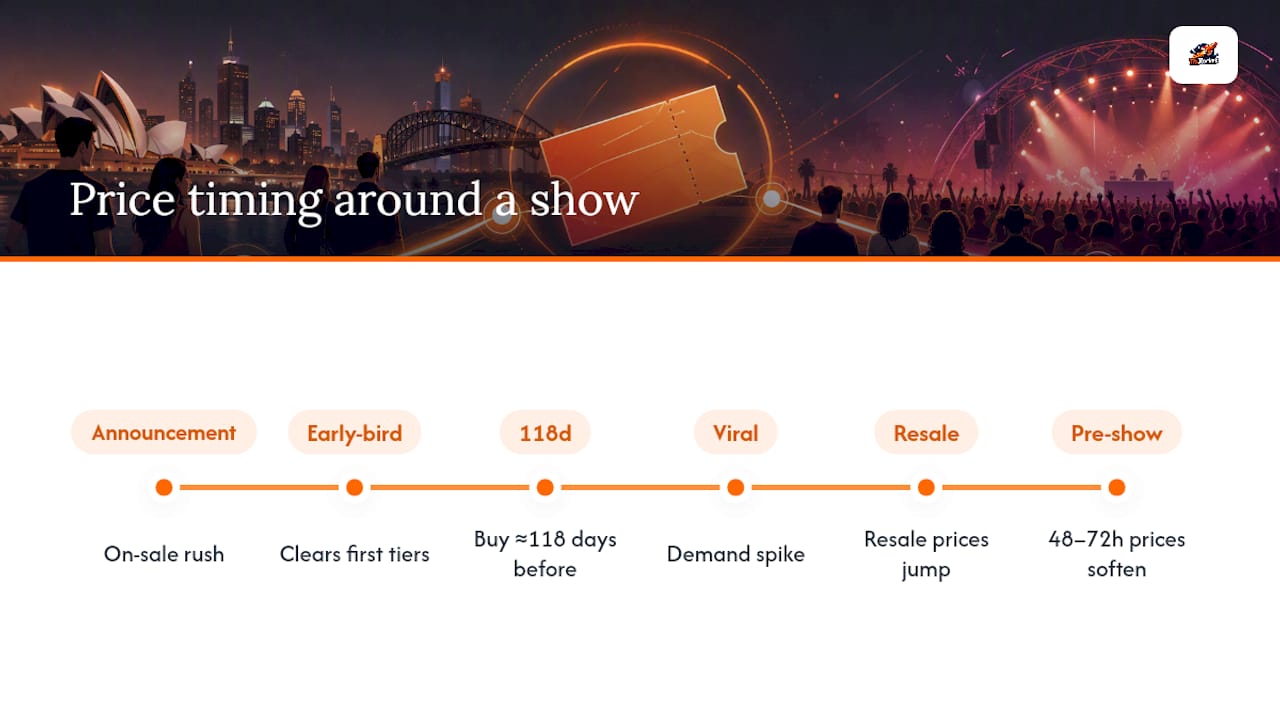
Sometimes, but it depends entirely on the show. Resale prices typically spike immediately after a sellout as demand outstrips remaining stock. For large-scale shows, resale prices can dip 48 to 72 hours before the event as resellers try to offload inventory rather than eat the loss. That pattern is far less reliable for intimate club nights or boutique gigs, where limited capacity means a dip rarely happens at all.
Before you buy anything last-minute, run through the ACCC's consumer checklist:
- Buy only from authorised sellers or the venue's official box office
- Check for
httpsand a padlock icon before entering card details - Be sceptical of "only 2 left" countdowns and other false-scarcity tactics
- Watch for drip pricing, where fees appear only at the final checkout step
Resale prices often spike straight after sellout for high-demand shows, then can soften in the 48 to 72 hours before doors open, a pattern that's far less predictable for smaller venues.
Two extra tactics worth knowing: venues often release production holds (VIP and media allocations) close to showtime, so calling the box office directly can surface seats that never hit public resale. And during high-demand on-sales, abandoned carts and failed payments regularly return stock to inventory in the final minutes, so staying on the page a little longer than feels reasonable sometimes pays off.
How do you budget for a whole season of shows?
Buying tickets for one gig is easy. Surviving an entire festival season without your bank account crying is the real challenge.
- Map the season first. List every festival, tour and club night you're tempted by, then rank them by how much you'd actually regret missing.
- Set a landed-price ceiling per event. Decide your absolute maximum, including fees, before you start browsing, not after you're three tabs deep.
- Use payment plans or staggered purchases where offered. Spreading a festival pass over weeks beats one painful lump sum.
- Choose single-day passes over full weekends when budget's tight. You still see the headliners without paying for days you'd only half attend.
- Pace yourself. Factor in food, travel and merch, not just the ticket price, and space out major nights so you're not burnt out by week three.
Sorting your priorities early, as outlined in festival season budgeting advice, stops you from panic-buying every announcement that lands in your inbox.
Why do organisers push for earlier ticket sales?
Buyer timing isn't just a punter's problem. It's a genuine headache for promoters and venues trying to plan a show months out.
Industry reporting shows Australian audiences are increasingly buying tickets closer to the event date, which creates real uncertainty for smaller and mid-sized shows trying to gauge whether a night will break even. Late-buying patterns make it harder to justify production costs, staffing and artist fees with confidence.
If you're running events, a few levers help shift that behaviour: for insights on combining creative elements effectively, see festivals combining art and music.
- Stage your ticketing into clear tiers (early-bird, general, door price) so the cost of waiting is visible and immediate
- Launch a membership or loyalty program that rewards early commitment with presale access
- Be explicit about which platforms are authorised sellers, so buyers aren't second-guessing legitimacy
- Offer small early perks (merch, priority entry, meet-and-greet access) that cost little but shift buyer psychology
Pro Tip: Announce your presale date on social media at least a week before the code goes out. The anticipation itself drives sign-ups to your mailing list, which is the audience you'll want for your next three shows.
Does the day or time you buy actually change the price?
For most ticketed events, the calendar date you buy on matters more than the price you see listed. Early-bird and presale windows are tied to fixed dates, not weekdays, so buying on a Tuesday versus a Saturday rarely shifts the sticker price for a first-release ticket.
Where day and time genuinely matter is on-sale timing itself. Major on-sales are typically scheduled for weekday mornings, often 9am or 10am local time, when platforms have the server capacity to handle demand and support teams are staffed to manage issues. Buying the moment a tier opens beats waiting even a few hours into the same day, because tiers move in blocks. Once an early-bird allocation sells out, the next tier at a higher price opens automatically, regardless of what day it happens to be.
Resale is where day-of-week patterns show up more. Resale listings for weekend shows tend to see heavier browsing traffic Thursday through Saturday, which can push resale prices up right before the event rather than down. If you're chasing a late resale bargain, weekday evenings earlier in the week tend to have thinner competition, giving you more room to negotiate or simply grab a listing before someone else does.
Do holidays and peak seasons change ticket prices?
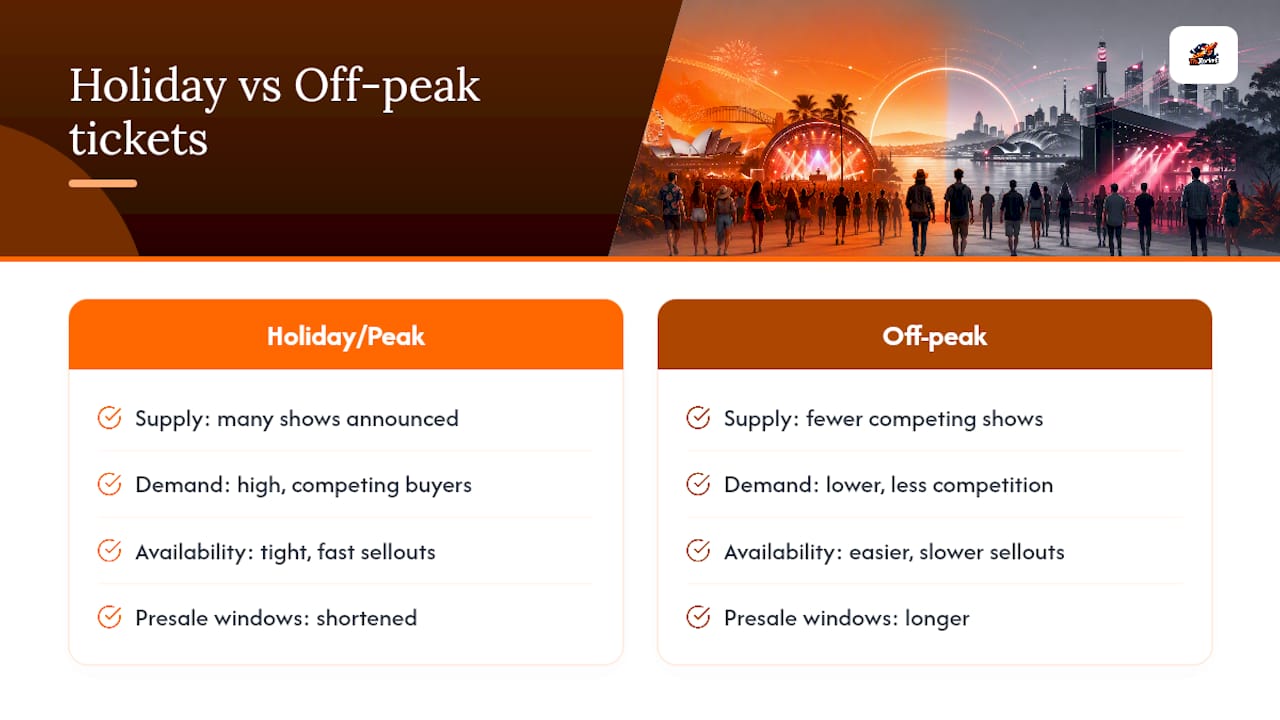
Seasonal timing shapes both price and availability more than most buyers expect. Summer festival season and the lead-up to major public holidays are when the highest volume of shows compete for the same audience and the same discretionary spend.
Long weekends and school holiday periods see a spike in club night and touring show announcements, because promoters know audiences have more free nights available. That surge in supply doesn't always mean lower prices. It usually means faster sellouts for the biggest names, because everyone's trying to book the same weekend.
End-of-year and New Year's Eve events are the clearest example. Capacity fills earlier, presale windows shorten, and last-minute resale prices tend to run higher rather than lower, since NYE has no "next weekend" fallback for buyers who miss out. Festival season seat availability tightens the same way heading into summer, when line-up announcements for multiple major festivals often land within weeks of each other.
The practical takeaway: if a show falls near a long weekend, public holiday or the festival season peak, treat the early-bird window as non-negotiable rather than optional. Waiting for a "quiet period" discount on a holiday-adjacent event rarely happens, because demand simply doesn't ease up the way it might for a random Wednesday in a low season.
What happens to prices when an artist blows up overnight?
Demand surges are the single biggest disruptor to any timing strategy, and they're almost impossible to predict from a calendar alone. An artist charting unexpectedly, a viral moment, or a surprise album drop can turn a modestly priced show into a sellout within hours.
Event announcements themselves trigger the first wave. The minute a tour or festival line-up drops, the highest-demand acts create an immediate rush on early-bird tiers, often clearing that first pricing tier before general on-sale even opens. If you're eyeing a specific artist, following their announcement channels directly, rather than waiting for a friend to mention it, is the difference between grabbing early-bird pricing and paying resale rates a week later.
The second wave hits after a cultural moment: a festival slot getting rescheduled, a hometown show announcement, or a viral clip pushing an artist into mainstream attention. When that happens, remaining allocation can disappear within a single day, and resale listings often jump well above face value almost immediately, well before the 48 to 72 hour pre-show window where prices sometimes soften again.
For club nights and DJ events, demand surges tend to be more localised. A DJ's surprise back-to-back set announcement or a last-minute lineup addition can sell out a venue's remaining capacity within a night, particularly in capital city nightlife scenes where word travels fast through group chats and social stories before it hits a press release.
Should you buy direct from the organiser or through a resale platform?
Buying direct from the official event page or box office is almost always the safer, cheaper default. You get face-value pricing, guaranteed entry, and a paper trail if something goes wrong with the event itself.
Third-party resale platforms exist for a legitimate reason: they let fans who can no longer attend pass tickets on safely, and verified resale marketplaces can be a reasonable last resort when an official on-sale has genuinely sold out. The risk sits with unverified or unauthorised resale, where fake listings, duplicate tickets and inflated "service fees" are common complaints.
The ACCC is explicit on this point: buy from authorised sellers, verify the site is secure, and treat urgency tactics like countdown timers or "almost sold out" banners with scepticism, since these are common drip-pricing and false-scarcity tactics regulators actively warn against.
The practical rule: exhaust official channels first, including checking back for production hold releases, before turning to resale. If you do end up on a resale platform, confirm it's a verified marketplace rather than a peer-to-peer classifieds listing with no buyer protection attached.
An insider's honest take on ticket timing
I've watched enough on-sales crash and burn to know the pattern repeats every season: everyone waits, prices for what's left creep up, and someone always messages the group chat asking if anyone knows where to get "cheap" tickets three days out. It rarely ends well.
What gets missed in most advice is the flip side. Buying early isn't just good for your wallet, it's what keeps smaller venues and local promoters able to book the acts you actually want to see. Cost-of-living pressure is real, and I'm not going to pretend a presale ticket doesn't hurt the budget. But committing early to the shows you genuinely care about, even one or two a season, is the difference between your favourite local nights surviving and quietly disappearing.
— GARY
Find presales and manage your next event through TixRocket
TixRocket is the direct route to skip the guesswork around when tickets drop, and where. For event-goers, that means presale alerts, verified on-sale timing and a secure checkout that doesn't bury fees until the last screen, exactly the kind of drip pricing the ACCC warns buyers to watch for. Browse everything from Bollywood nights to club events and arena tours in one place, with pricing shown upfront.
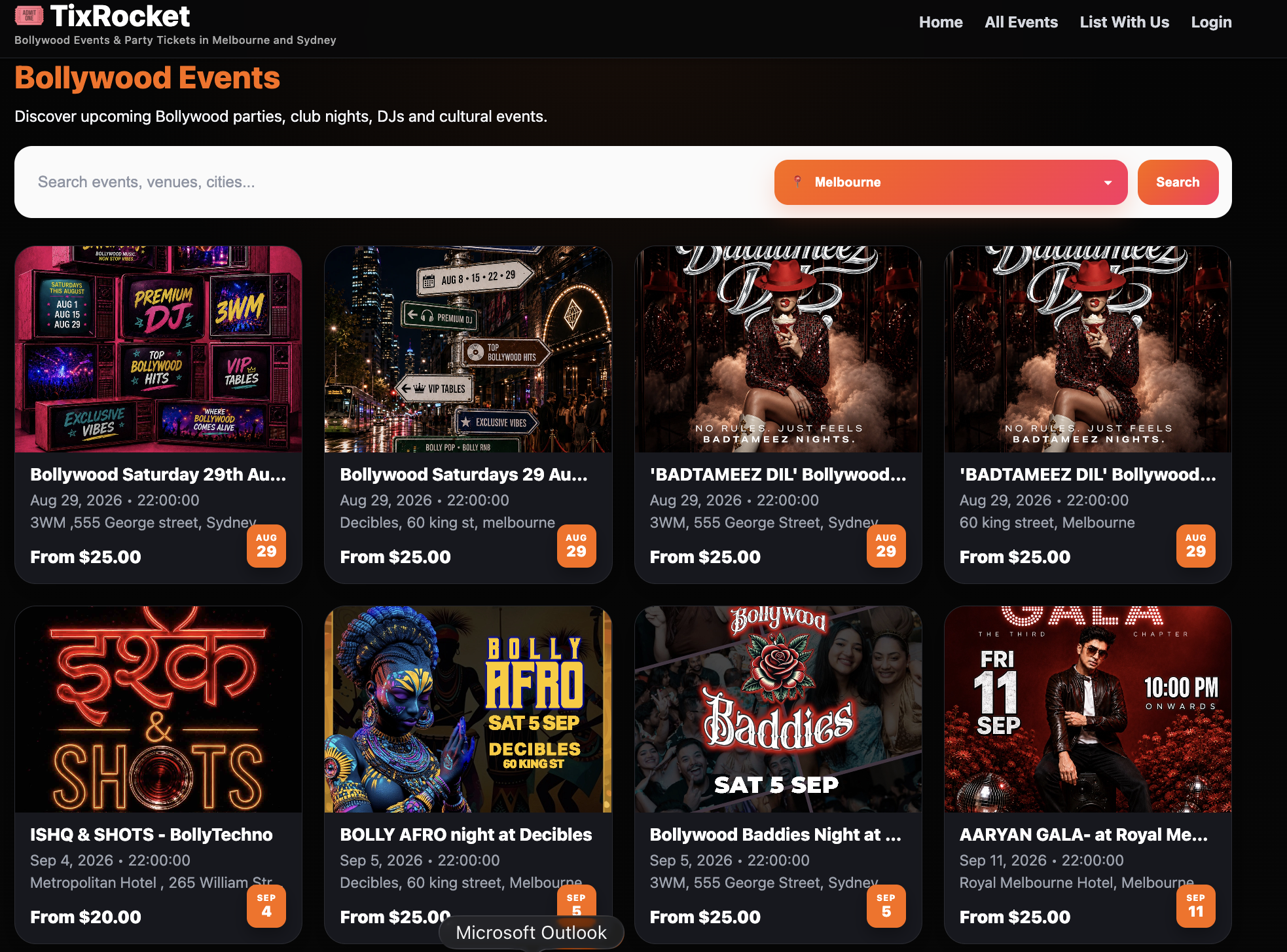
For promoters, artists and venues, TixRocket makes staged pricing simple. You can publish an event, build ticket tiers from early-bird through to door price, and track sales in real time, without juggling three separate tools to manage a single on-sale. Given how much uncertainty late buying creates for smaller shows, giving your audience a clear, authorised place to buy early works in your favour as much as theirs.
Head to TixRocket to browse upcoming presales or list your next event, and always buy through the venue's confirmed authorised seller.
Sources
- Buying tickets to events | Australian Competition & Consumer Commission (ACCC)
- Experts say audiences are buying tickets closer to events, causing 'lack of certainty' in industry - ABC News
- How to do festival season without blowing your budget | Forte Magazine
FAQ
What is the best time to buy tickets for a concert?
Buy during presale or early-bird release for most concerts, since prices are lowest and availability is highest before the general on-sale opens.
How far in advance should you buy tickets?
Fans typically buy well ahead of the event, with average lead times around 118 days for high-demand shows, so aim to buy as soon as presale opens for major tours.
Is last-minute buying ever the cheapest option?
Only sometimes, and mainly for large shows, where resale prices can dip 48 to 72 hours before the event as resellers try to offload stock. Smaller club nights rarely follow this pattern.
Are third-party resale sites safe to buy from?
Only if they're verified, authorised resale marketplaces. The ACCC advises checking for secure websites and buying only from authorised sellers to avoid fraud and drip pricing.
Does buying tickets on a certain day of the week make them cheaper?
Rarely for first-release tickets, since pricing tiers are date-based rather than weekday-based. Resale prices, however, often rise on weekends when browsing demand peaks.
Disclaimer: Event dates, times, venues, ticket prices, availability and entry requirements may change. Please check the official TixRocket event page before purchasing or attending. Venue conditions, age restrictions and valid photo ID requirements may apply.